Choosing The Right Adhesives And Grouts For Darwin Conditions
Anyone who has watched tiles lift from a bathroom floor or seen grout crumble away from an outdoor patio in a matter of seasons knows the frustration that comes from using the wrong products. In most parts of Australia, a standard adhesive and grout combination holds up reasonably well for years. In the tropics, however, the rules change. High humidity, extreme heat cycles and the seasonal intensity of the wet season create conditions that standard products simply are not designed to handle. Getting the chemistry right before the tiles go down is what separates an installation that lasts from one that starts failing before the renovation is even finished.
Why Standard Products Fall Short in Tropical Climates
The fundamental challenge in high-humidity environments is moisture movement. Tropical conditions involve dramatic shifts between wet and dry periods — substrates expand and contract, moisture drives into materials and then evaporates again, and adhesive bonds that were never designed for this cycling begin to fail.
Standard cement-based adhesives have limited flexibility. Over time, inflexible adhesives develop micro-fractures that cause tiles to delaminate, particularly in outdoor areas and wet zones. Standard grouts in high-moisture environments are also susceptible to mould and discolouration — and once mould establishes in the grout matrix, reversing it without a full regrout is difficult. The right products are readily available. Knowing what to specify makes all the difference.
Understanding Tile Adhesive Types
Tile adhesives fall into several categories, each suited to different conditions.
Cement-based adhesives are the most common product type. For tropical conditions, flexible cement-based adhesives — which include polymer additives — are the minimum specification for most applications, giving the cured adhesive enough movement capacity to handle substrate cycling.
Epoxy adhesives offer the highest moisture resistance and bond strength. They are specified for high-exposure areas — pool surrounds, commercial kitchen floors and chemically aggressive environments — and require a more controlled application process.
Ready-mixed adhesives are convenient for small repairs but are not suitable for outdoor applications or permanently wet areas.
Key factors when selecting adhesive:
- Whether the installation is indoors or outdoors
- The substrate material and condition
- Tile size — large-format tiles require higher flexibility ratings
- Whether the area is permanently wet, intermittently wet or dry
Adhesive Selection for Indoor Wet Areas
Bathrooms, laundries and shower recesses combine constant moisture exposure with the thermal cycling a tropical climate amplifies. For these areas, a minimum C2S1 or C2S2 classified adhesive is recommended — classifications under AS ISO 13007 that indicate improved adhesion and deformability. In practical terms, this means the adhesive will remain bonded under the movement and moisture cycling these spaces experience.
Substrate preparation is equally important. Waterproofing membranes must be correctly applied and cured before adhesive goes down, and compatibility between the adhesive and membrane should be confirmed — incompatible products can prevent proper bond formation.
Practical considerations:
- Flexible, polymer-modified cement adhesive as a minimum for wet areas
- Epoxy adhesive for areas with continuous water immersion
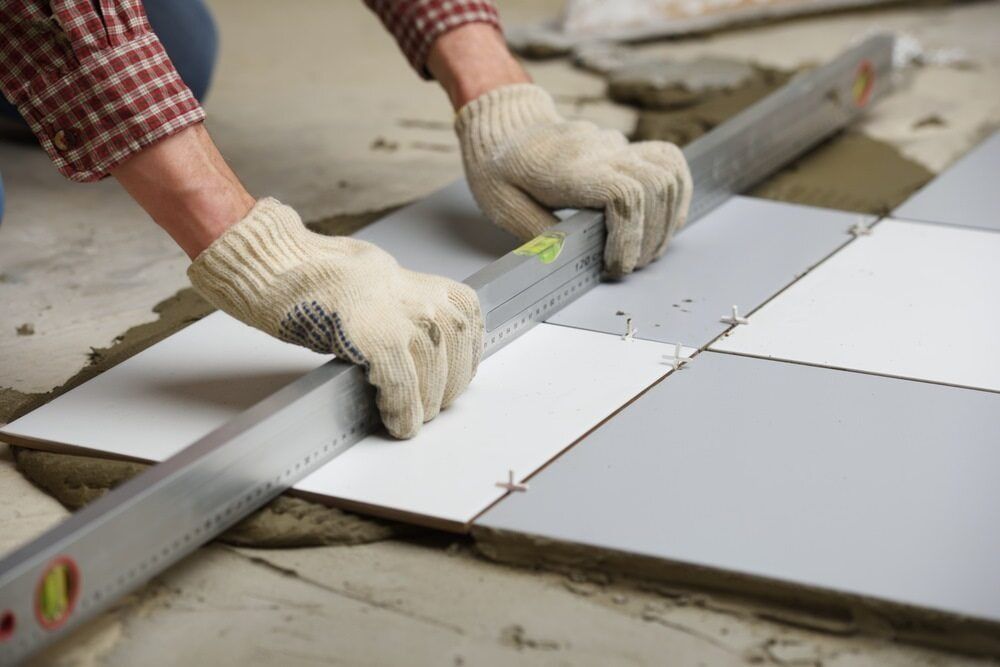
- Back-butter large-format tiles to ensure full coverage and avoid hollow spots
Adhesive Selection for Outdoor Areas
Outdoor tiled areas in tropical climates present the most demanding adhesive requirements. UV radiation, heavy rain, temperature extremes and — in coastal locations — salt air all narrow the appropriate product range considerably. For outdoor concrete substrates, an external-rated flexible adhesive is the baseline. For pool coping and areas subject to direct water contact, an epoxy adhesive is strongly recommended. Critically, expansion joints must be incorporated at correct intervals — outdoor tiles without adequate expansion provision will fail regardless of adhesive quality. A concrete slab that has not fully cured, or that has surface contamination from curing compounds or sealers, will not bond correctly regardless of what adhesive is used. Checking moisture levels with a moisture meter before beginning is a non-negotiable step.
Choosing the Right Grout
Grout selection is as important as adhesive selection but often receives less attention. Grout fills joints, manages tile dimension variations and contributes to the moisture management of the installation overall.
Cement-based grout is porous and susceptible to staining and mould in humid environments. A polymer-modified formulation or grout sealer significantly improves performance in tropical conditions.
Epoxy grout is non-porous, stain-resistant and does not require sealing. It is the preferred choice for pool surrounds, food preparation areas and any application where long-term low maintenance is the priority. The trade-off is a more demanding application process and shorter working time.
Grout selection considerations:
- Polymer-modified cement grout as a minimum for wet areas
- Seal cement grout after curing and at regular intervals
- Specify epoxy grout for pools, commercial kitchens and high-maintenance-risk applications
- Choose lighter grout colours for outdoor areas — they absorb less heat in tropical conditions
Matching Joint Width to Grout Type
Unsanded grout suits joints up to approximately 3mm. Sanded grout handles joints from 3mm to around 12mm. Using the wrong type for the joint width leads to either shrinkage cracking or surface scratching on polished tiles. Large-format tiles often require slightly wider joints to accommodate manufacturing tolerances. The minimum for rectified large-format tiles is typically 2mm, with 3–5mm more common in practice. Checking manufacturer specifications before committing to a joint width prevents compatibility problems later.
Following Manufacturer Specifications
Adhesive and grout products are engineered systems. Performance claims are based on correct use — mixing products from different systems, deviating from recommended coverage rates or applying outside recommended temperature and humidity ranges can all compromise the result. In tropical conditions, high ambient humidity can extend open time for some adhesives but also affect grout curing and increase the risk of efflorescence in cement-based products. Following manufacturer guidance on working conditions is not overcaution — it is part of getting a lasting result.
Getting the Specification Right From the Start
Selecting the correct products for a specific project is not always straightforward. Substrate conditions, tile materials, area use and exposure conditions all feed into the decision. Getting product-specific advice before purchasing is time well spent — particularly for projects involving unusual conditions or tile materials with specific requirements.
At Northern Tile Gallery, we stock a comprehensive range of adhesives, grouts and installation products suited to the demands of the tropical climate. Our team is here to help homeowners, builders and tilers in Darwin find the right products for each application — whether you are tiling a bathroom, outdoor patio, commercial kitchen or pool surround. Visit our tile shop near me or reach us at our website or call (08) 8947 1182. As a tile shop in Darwin locals have relied on for over 20 years, we understand what the Territory's conditions demand from tile adhesive Darwin installations and are here to help you get it right from the start.